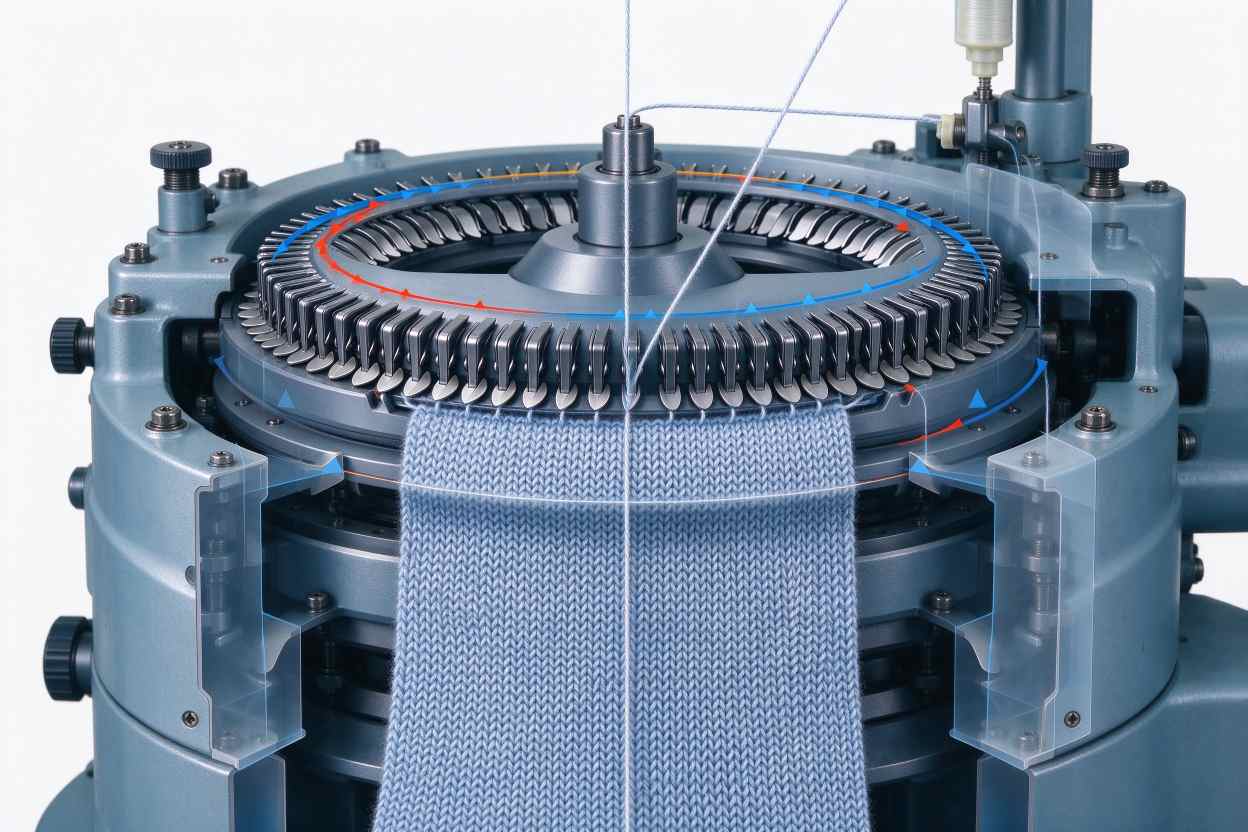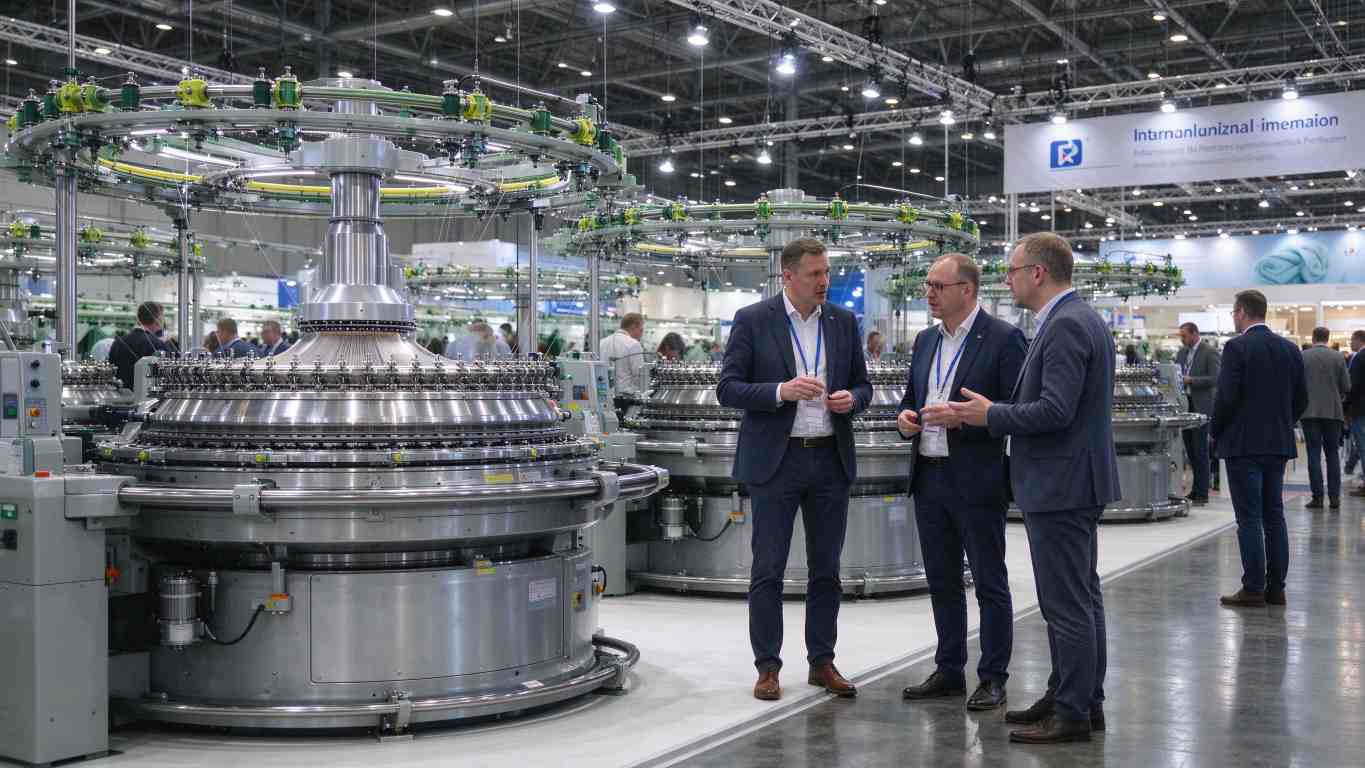

Circular knitting machines produce fabric by feeding yarn into a rotating needle system, where needles form loops that are intermeshed into a continuous tubular structure. The process appears mechanically simple, but the quality and performance of the resulting fabric depend on a complex interaction among yarn type, machine gauge, stitch length, tension control, speed, and mechanical precision.
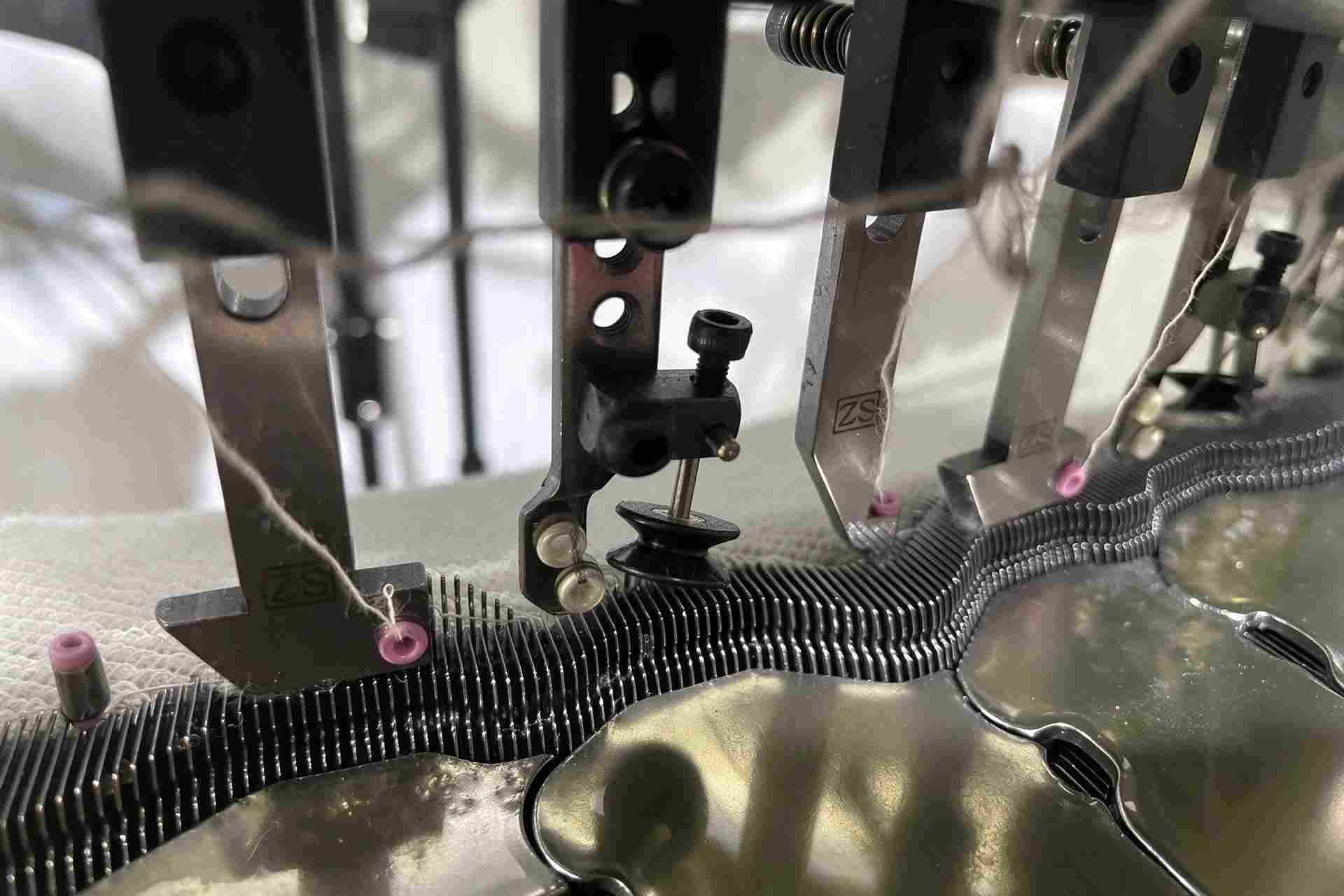
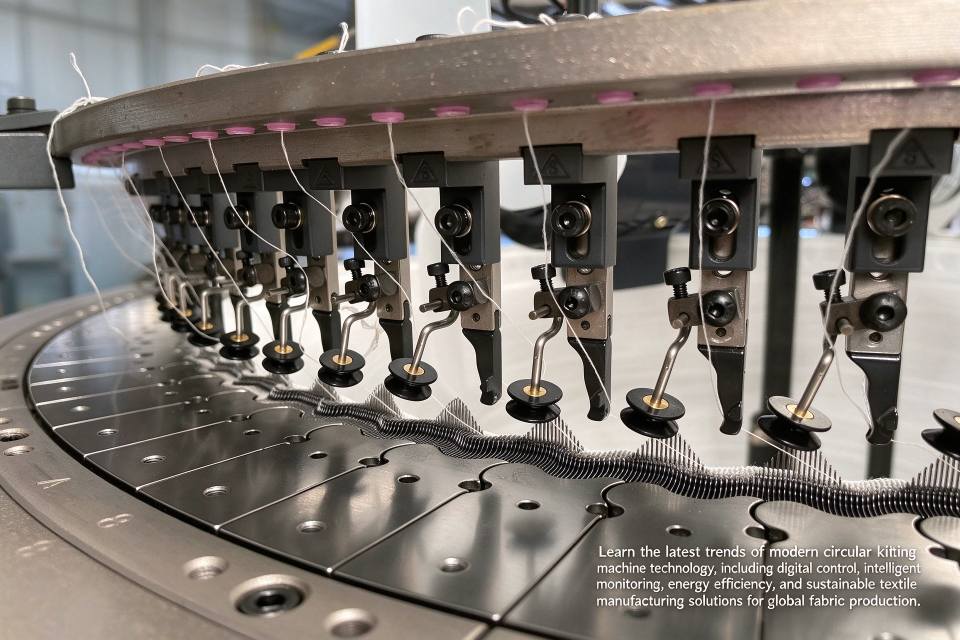
At the heart of the circular knitting process is the needle cylinder. The needles, mounted in the cylinder, move up and down according to the cam system to form loops. The precise movement of these needles directly affects loop uniformity, fabric structure, and surface appearance. Even minor variations in needle timing or cam setting can cause visible defects such as uneven stitches, vertical lines, or inconsistent fabric density.
Yarn feeding is another critical factor. Yarn must be delivered to the knitting zone at a constant tension to ensure stable loop formation. Modern machines use yarn feeders, tensioners, and guide systems that work together to control yarn flow. When tension is too high, yarn breakage may occur; when it is too low, loop formation can become irregular. Maintaining consistent yarn tension is therefore essential for both quality and productivity.
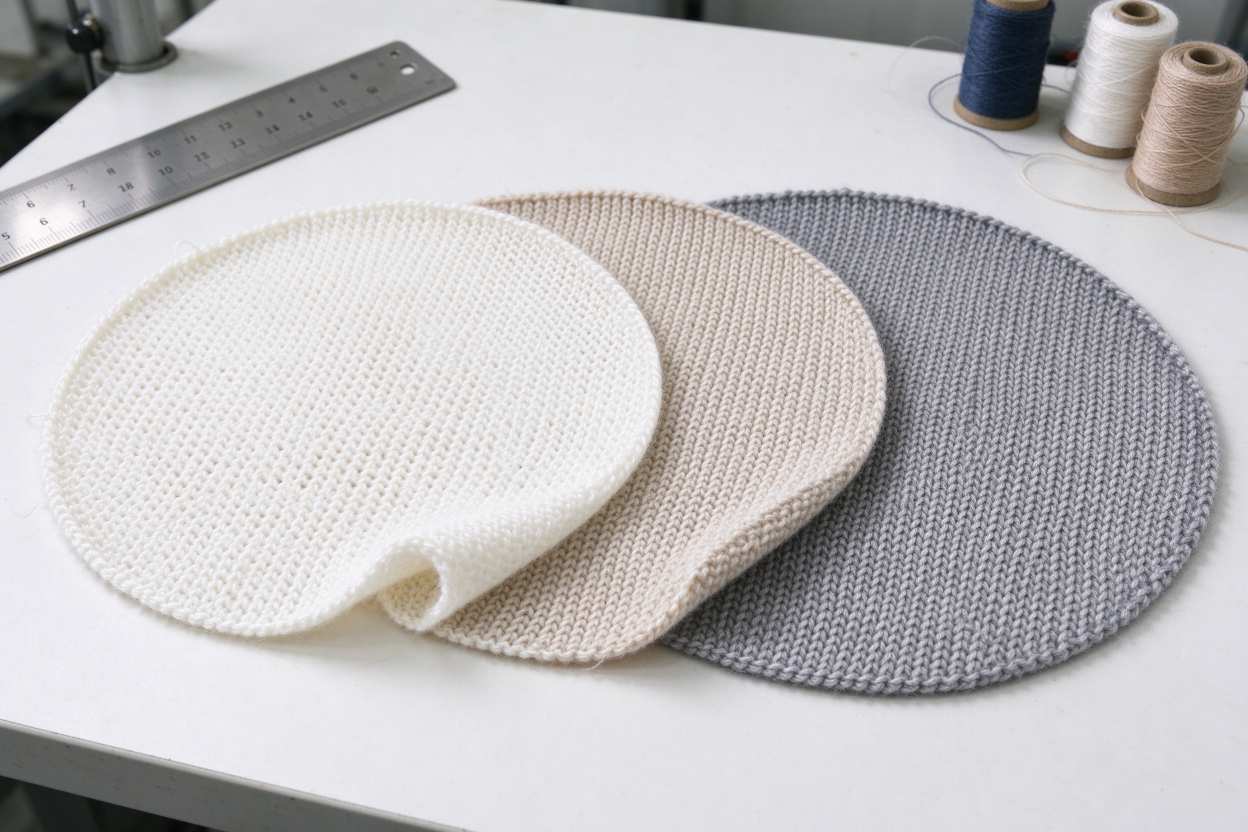
Stitch length control is one of the most important parameters in circular knitting. It determines how much yarn is used in each loop and has a direct influence on fabric weight, thickness, stretch, hand feel, and stability. Electronic circular knitting machines allow operators to set and adjust stitch length more precisely, making it easier to reproduce the same fabric specifications across different production runs. This level of control is especially valuable for producing high-quality sportswear, underwear, and technical textiles.
Machine speed must also be carefully balanced with quality. Higher rotational speed increases output, but it also places greater stress on yarn, needles, and control systems. If the machine runs too fast without proper synchronization, defects can increase. Consequently, modern circular knitting technology focuses not only on maximum speed but also on stable speed performance, low vibration, and accurate control at high operating rates.
Quality monitoring systems are becoming increasingly important in advanced circular knitting machines. These systems can detect problems such as yarn breakage, needle damage, and stitch irregularities during production. By identifying defects early, manufacturers can reduce waste, minimize reprocessing, and maintain consistent fabric quality. This capability is particularly valuable in large-scale production environments where small defects can quickly affect large quantities of fabric.
In summary, circular knitting machine process technology is a sophisticated field that involves the precise control of needles, yarns, tension, stitches, and speed. By improving these control parameters, textile manufacturers can produce higher-quality fabrics while increasing productivity and reducing production costs. As demand for better-performing textiles continues to grow, circular knitting technology will remain a key area of innovation in the global textile industry.