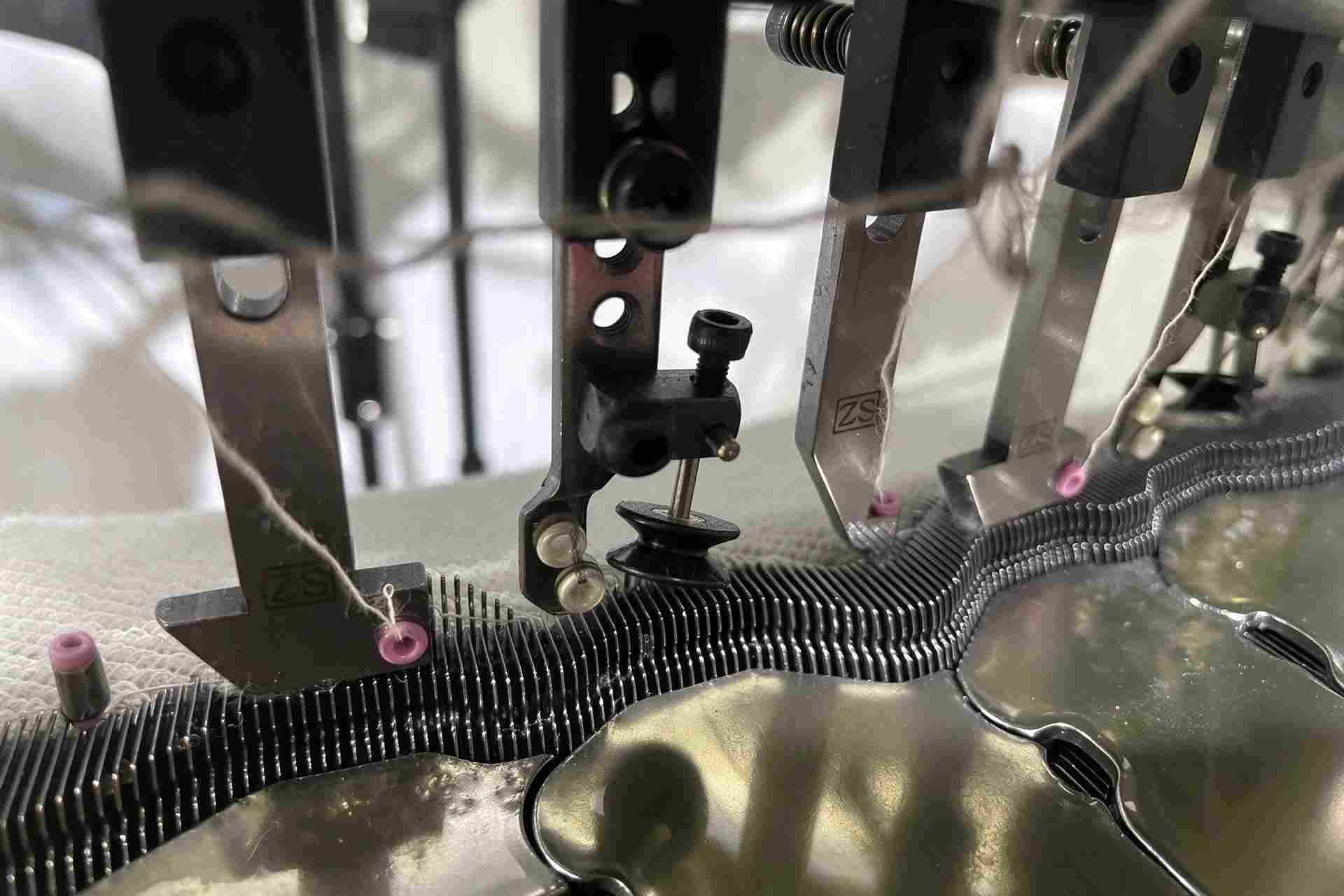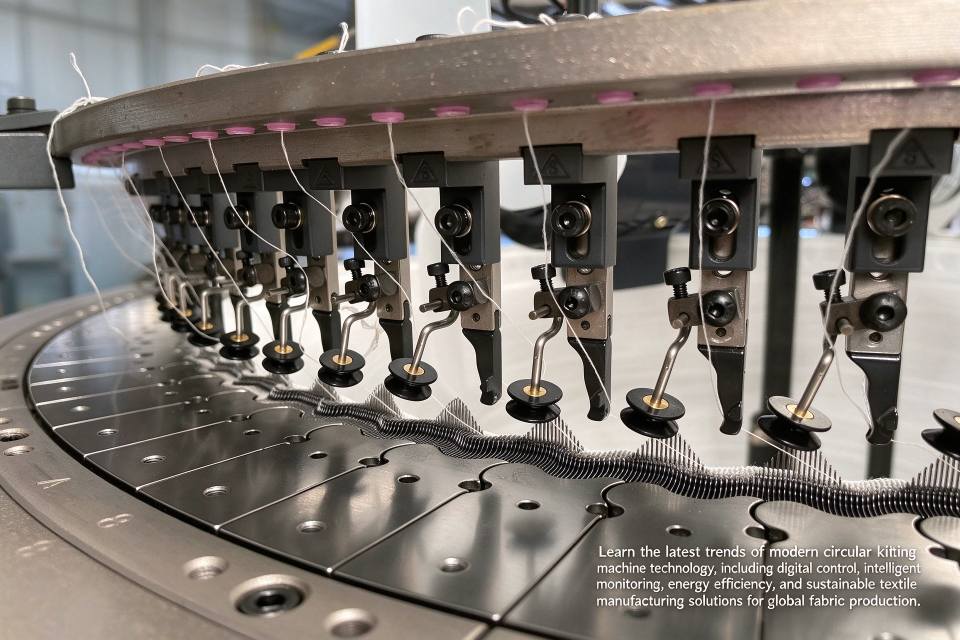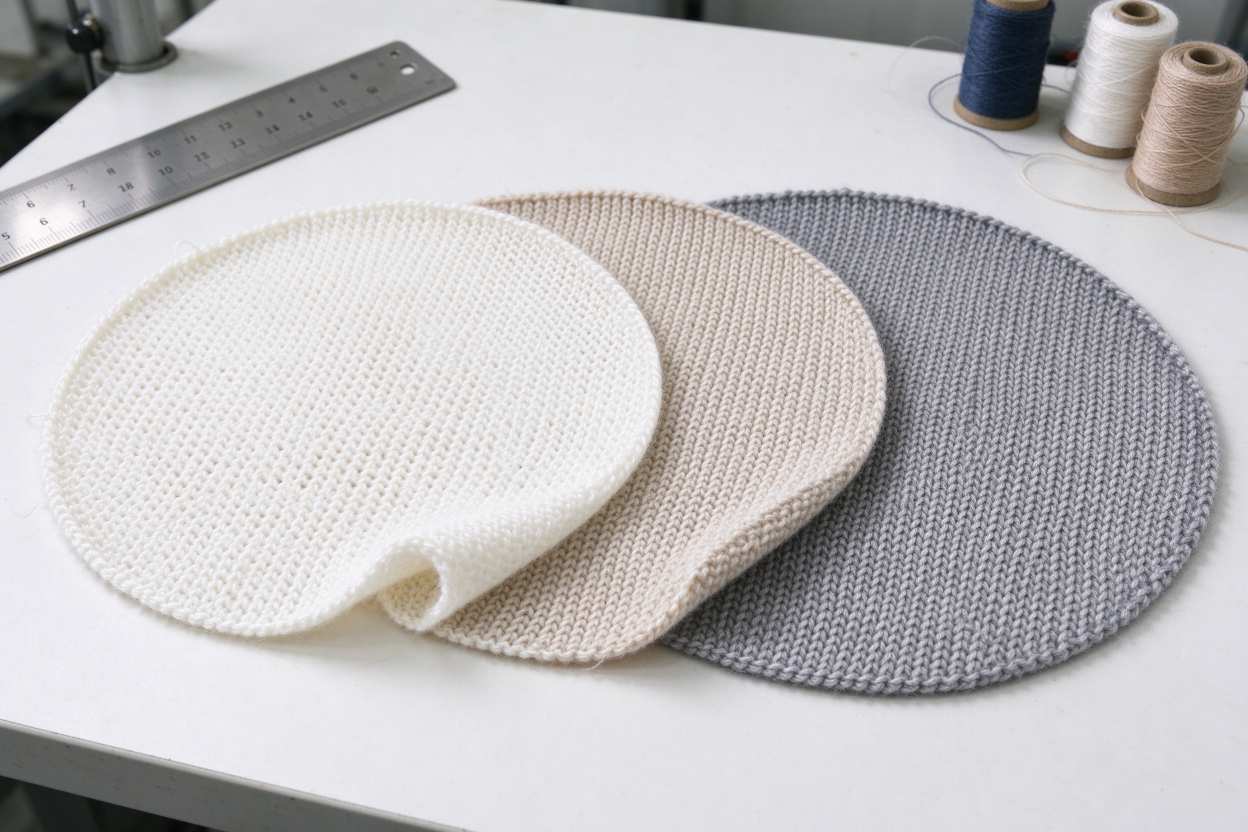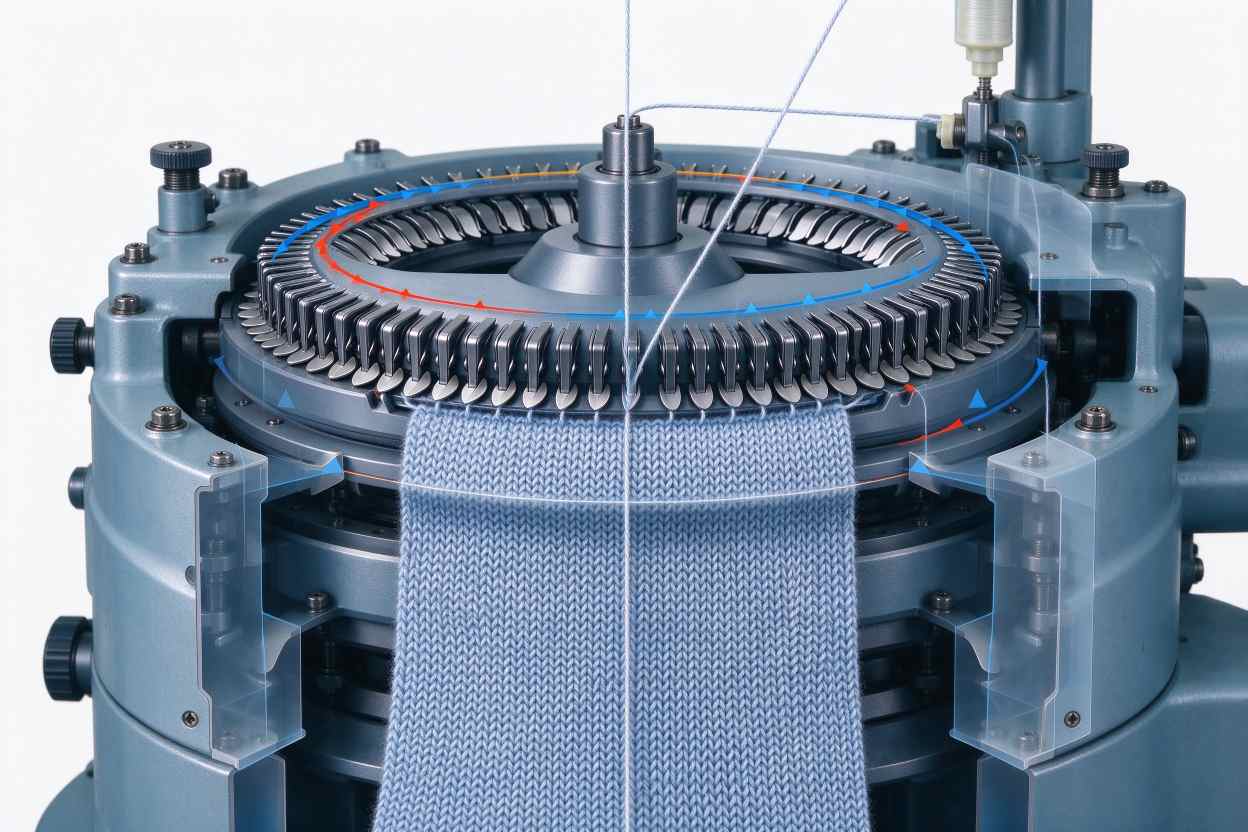

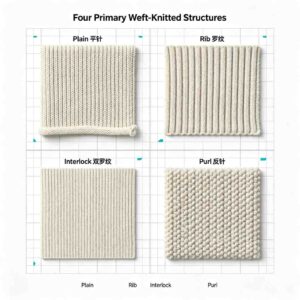
Four fundamental base weft-knitted structures — plain, rib, interlock and purl — form the foundation for all weft-knitted fabrics and garments. Each consists of a unique combination of face and reverse meshed stitches, produced using a specific needle bed configuration. Each primary structure can exist as a standalone fabric, as a modified variant incorporating stitches other than standard cleared loops, or blended with another primary structure within a garment-length knitting sequence.
Unless special locking courses are incorporated, or the fabric receives dedicated seaming or finishing treatment, all weft-knitted fabrics are prone to unravelling, or laddering, starting from the last knitted course.
Plain fabric is formed when one set of needles draws loops from the technical back toward the technical face of the fabric.
Rib fabric requires two interleaved sets of needles, creating columns (wales) of face stitches and columns of reverse stitches on opposite sides of the fabric.
Interlock originates from the rib structure but uses a special back-to-back needle arrangement operating in an alternating sequence of two needle sets. The two courses of loops create aligned wales of face loops on both fabric surfaces, concealing the reverse loops from view.
Purl is the only structure where individual wales contain both face and reverse meshed loops. A garment-length knitted sequence such as ribbed half-hose is classified as purl, even though shorter segments within it may feature plain or rib sections.
Single-jersey knitting machines can only manufacture one type of these base structures.
Rib knitting machines, especially garment-length models, can produce plain-knit sequences by utilising only one needle bed.
Interlock knitting machines may sometimes be reconfigured to knit rib fabric.
Purl machines are able to produce rib or plain knitting sequences by maintaining selected needle settings while knitting a garment or other knitted product.