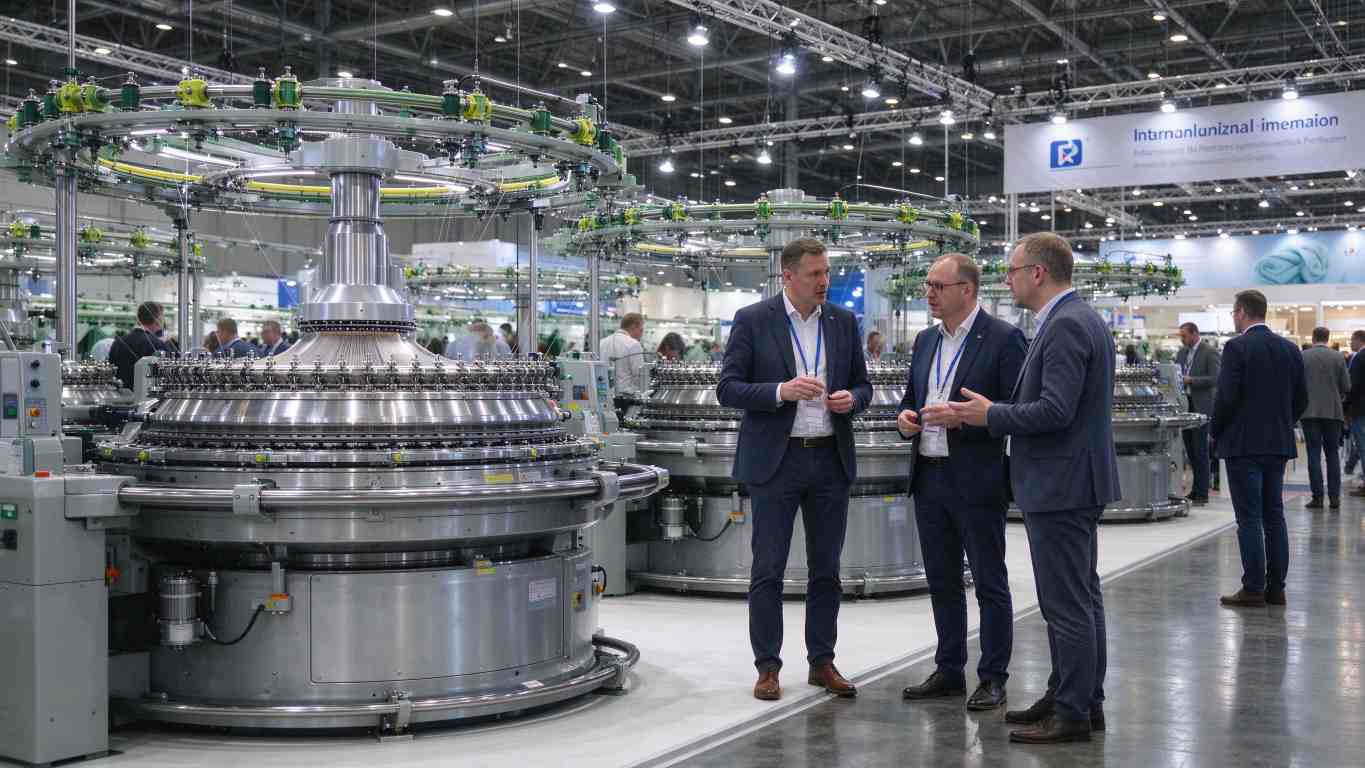

SHANGHAI, CHINA — June 10, 2018 — Rising electricity costs and tightening environmental regulations are pushing energy efficiency to the forefront of circular knitting machine purchasing decisions, according to industry executives interviewed at the 2018 ShanghaiTex exhibition. Machinery manufacturers across Germany, Italy, China, and Taiwan are now advertising energy consumption figures as prominently as knitting speed and cylinder size.
The shift is particularly visible in China’s Zhejiang and Guangdong textile heartlands, where industrial electricity tariffs rose in 2017 and again in early 2018. For a typical mid-sized circular knitting mill operating 50–100 machines in two shifts, electricity accounts for roughly 15–20% of total operating costs. A machine that cuts power consumption by 15% can save the owner tens of thousands of dollars annually — a figure that has become impossible to ignore in purchase negotiations.
Machine builders have responded with a wave of engineering improvements. Direct-drive servo motors have replaced belt-and-pulley systems on many new models, eliminating mechanical transmission losses. Optimized cam designs reduce the force required to lift needles, lowering peak motor load. Improved lubrication systems and frame rigidity reduce vibration and friction, further cutting wasted energy. Some manufacturers have also introduced regenerative braking systems that recover energy during machine deceleration.
BUEN-KNIT Textile Machinery, for example, launched its own series large circular knitting machine in 2018 with full-process data collection and cloud-based management capabilities. The company reported that the system improved overall equipment effectiveness (OEE) by more than 15% through better energy monitoring and predictive maintenance — a selling point that resonated strongly with Chinese mill owners facing rising energy costs.
Beyond new machine purchases, the aftermarket is also responding. Suppliers of auxiliary equipment, including fabric spreaders, tensioners, and take-down rollers, are redesigning their products to minimize energy consumption. Even the humble fabric spreader — once a purely mechanical component — now comes in low-friction, servo-assisted versions that reduce the load on the main drive. “Every component matters when you are running 24 hours a day,” said one parts distributor. “Customers ask about power draw on every accessory.”